


Before we get into all the nitty-gritty details, rest assured that loading dock doors aren’t just about allowing trucks to back in. They’re also about maintaining a consistent interior temperature, preventing unauthorized access, and ensuring smooth, fast operations on a daily basis. The simple question, “Which type of door is often used as a loading dock door?”, has an equally straightforward answer—sectional overhead doors are top contenders—but the reasoning behind that choice spans durability, insulation, and ease of maintenance.
A loading dock is the heartbeat of many commercial and industrial operations. Picture a busy warehouse or distribution center bustling with workers, forklifts whizzing by, and semi-trucks maneuvering in and out. The door that separates the interior from the outside must endure a lot:
Understanding this environment underscores why the question of “which type of door is often used as a loading dock door?” is so critical. A door that’s too slow to open or close can cause backups, while a door that isn’t insulated well can send energy bills skyrocketing. Efficiency and safety should align seamlessly in your choice.
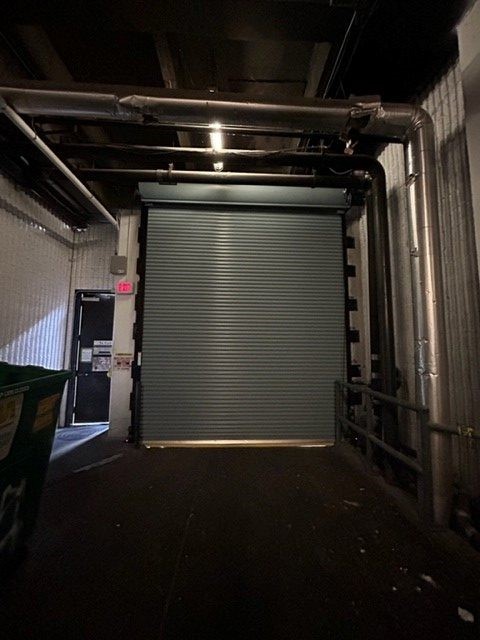

Temperature control is a big deal in many warehouses—especially those handling perishable goods. An uninsulated or poorly sealed dock door allows air infiltration, leading to increased heating or cooling costs. Sectional overhead doors can be fitted with foam-insulated panels to help maintain a consistent interior climate. Similarly, rolling steel doors can also offer insulation options, but each comes with its own performance trade-offs.
In a hectic environment, bumps and scrapes are common. Choosing a door that can handle direct forklift collisions or accidental impacts without permanently warping is key. Many high-quality sectional doors feature steel panels with durable finishes. Rolling steel doors, on the other hand, often use interlocking slats that can hold up under considerable stress.
You can’t have door operation slowing down your workflow. The type of door you choose impacts how quickly the doorway can be cleared for vehicles and personnel. While sectional overhead doors typically have moderate operational speeds, modern high-speed rolling doors are designed for rapid open-close cycles.
Ultimately, the loading dock environment sets the stage for the performance requirements your door must meet. Keep these points in mind as you move through the rest of the article, and you’ll be better positioned to identify which features are critical for your operation.
Industrial facilities have no shortage of door styles to choose from. Among them are sectional overhead doors, rolling steel doors, sliding doors, and even high-speed fabric doors. Let’s break down the two that typically dominate the landscape when it comes to loading docks:
Sectional overhead doors are those big, panel-like doors you might see in a modern garage, only sturdier and more feature-heavy for industrial settings. They’re built from individual sections connected by hinges, allowing them to roll upward along overhead tracks until fully open. Because each section can be made with varying levels of insulation, you can customize a door that offers just the right balance of thermal regulation and cost savings.
A typical sectional overhead door is constructed from:
Why are sectional overhead doors so often the answer to “Which type of door is often used as a loading dock door?”? Simply put, they offer a blend of durability, efficiency, and relatively easy maintenance. Plus, they can be designed to accommodate window panels, letting in natural light and improving safety by offering workers a quick glance at what’s happening on the other side.

Rolling steel doors are constructed from interlocking metal slats that coil around a barrel mounted above the door opening. When you open one of these doors, it essentially winds up into itself, saving side space. They’re particularly valued for their robust design, which can withstand frequent usage and sometimes more extreme conditions.
Features often include:
Rolling steel doors are especially beneficial for facilities with space constraints or those wanting a sleek, compact profile. However, they might be slightly noisier and can have higher initial costs, depending on the type of slats, automation, and finishes selected.
In the following sections, you’ll see how these common door types perform in real-world industrial settings and why sectional overhead doors remain the go-to choice for many loading docks.
When deciding which type of door is often used as a loading dock door, you should evaluate the specific features your door must have. No two warehouses are exactly alike, so your decision might hinge on a handful of key considerations:
These features form the backbone of a functional, efficient, and safe loading dock door. Not every facility needs top-of-the-line everything—sometimes a straightforward sectional door with moderate insulation might do the trick. But for high-volume operations with strict environmental requirements, advanced features can deliver substantial returns on investment over time.

Let’s circle back to why sectional overhead doors frequently dominate the conversation around “Which type of door is often used as a loading dock door?”:
With benefits spanning efficiency, durability, and customization, it’s easy to see why sectional overhead doors often come up as the simplest answer to our key question. However, every operation has its unique considerations, so the next section will help you look at alternatives and see how they stack up.
While sectional overhead doors remain popular, rolling steel doors still hold significant ground in the loading dock market. They both have advantages that might sway your final decision. Let’s compare them side by side.
Which is Right for You?
No matter which type of door you pick—rolling steel, sectional overhead, or an alternative—proper installation and routine maintenance are non-negotiable. Neglect can lead to costly breakdowns, safety hazards, and missed shipping deadlines
Hire Qualified Professionals: Incorrect alignment or tension can dramatically shorten a door’s lifespan. A seasoned technician ensures everything runs smoothly.
Regular Inspections: Schedule monthly or quarterly inspections. Check for loose bolts, damaged panels or slats, and signs of wear on springs or rollers.
Lubrication: Rolling components, hinges, and rails need proper lubrication to reduce friction and prolong system life.
Cleanliness: Keep tracks or the coiling barrel clear of debris. Even small obstructions can cause big problems over time.
Spring and Cable Checks: Springs and cables under extreme tension can be dangerous if they snap. Inspect them for signs of fatigue or rust.
Test Safety Features: Regularly verify photo-eye sensors and auto-reverse mechanisms. A single faulty sensor could jeopardize worker safety.
Document Everything: Maintain a log of installation dates, repairs, and parts replaced. This record can guide future decisions and help track expenses.
By adhering to best practices, you extend the functional lifespan of your loading dock door, improve worker safety, and keep your daily operations running like a well-oiled machine.
Having covered the features, comparisons, and advanced options, let’s summarize the key factors to consider when deciding which type of door is often used as a loading dock door in your specific situation:
Budget and ROI: Consider the total cost of ownership: purchase price, maintenance, and energy usage. Sometimes a cheaper door might cost more in long-term repairs or energy losses.
Frequency of Use: Doors used multiple times per hour benefit from durable components and possibly higher-speed operation.
Climate: Extreme cold or heat demands better insulation. Coastal areas with salt-laden air might need rust-resistant materials.
Facility Layout
If overhead space is limited, rolling steel doors could be advantageous. If you need to maximize light or visibility, sectional doors with window panels might be best.
Future Expansion: Anticipate growth. If you plan to upgrade your facility or expand loading dock areas, choose a door system that can scale with you or can be easily retrofitted with modern tech.
Industry-Specific Regulations: Food or pharmaceutical warehouses often must follow stricter hygiene and temperature-control standards. Check local regulations before finalizing a door type.
Security Requirements: If your loading dock is in a high-crime area or stores valuable goods, consider robust locking systems, heavy-gauge materials, and advanced access control.
Choosing the right door is about balancing these factors. For many facilities, the convenience and reliability of sectional overhead doors make them a top choice. But rolling steel doors or other specialized types might be the perfect fit for unique operational needs.
When it comes to choosing the right type of door for a loading dock, the quick answer is usually sectional overhead doors. However, as we’ve discussed in depth, that answer can vary based on several factors—your operational goals, the climate, the volume of traffic, and your budget for the long haul. In some situations, rolling steel doors, sliding doors, or even high-speed fabric doors might be a better fit than sectional doors.
So, what’s the takeaway? Take a close look at your facility’s specific needs, including security and safety requirements, as well as the space you have to work with. Think about how often your dock will be used, and don’t overlook the benefits of modern technology like IoT sensors or high-speed motors. Choosing the right loading dock door can not only safeguard your inventory and staff but also help cut down on energy costs and make daily operations smoother. Whether you’re updating an existing warehouse or building a brand-new distribution center, putting money into the right loading dock door is crucial. Don’t hesitate to reach out to experts in door manufacturing and installation to find a solution that fits your business perfectly—after all, a door is more than just a slab of metal or composite; it’s a gateway to running efficient and profitable operations.
Need assistance in selecting the perfect dock door? Get in touch with Alpha Overhead Doors today. Whether you require expert installation, quick repairs, or simply have questions about which dock door is best for your warehouse, our team is ready to support you every step of the way. Let us help you get it right the first time! Call us today at (602) 413-3313.